Dairy Traditions in the North
Cultural significance and nutritional role
Dairy Agriculture in Northern England
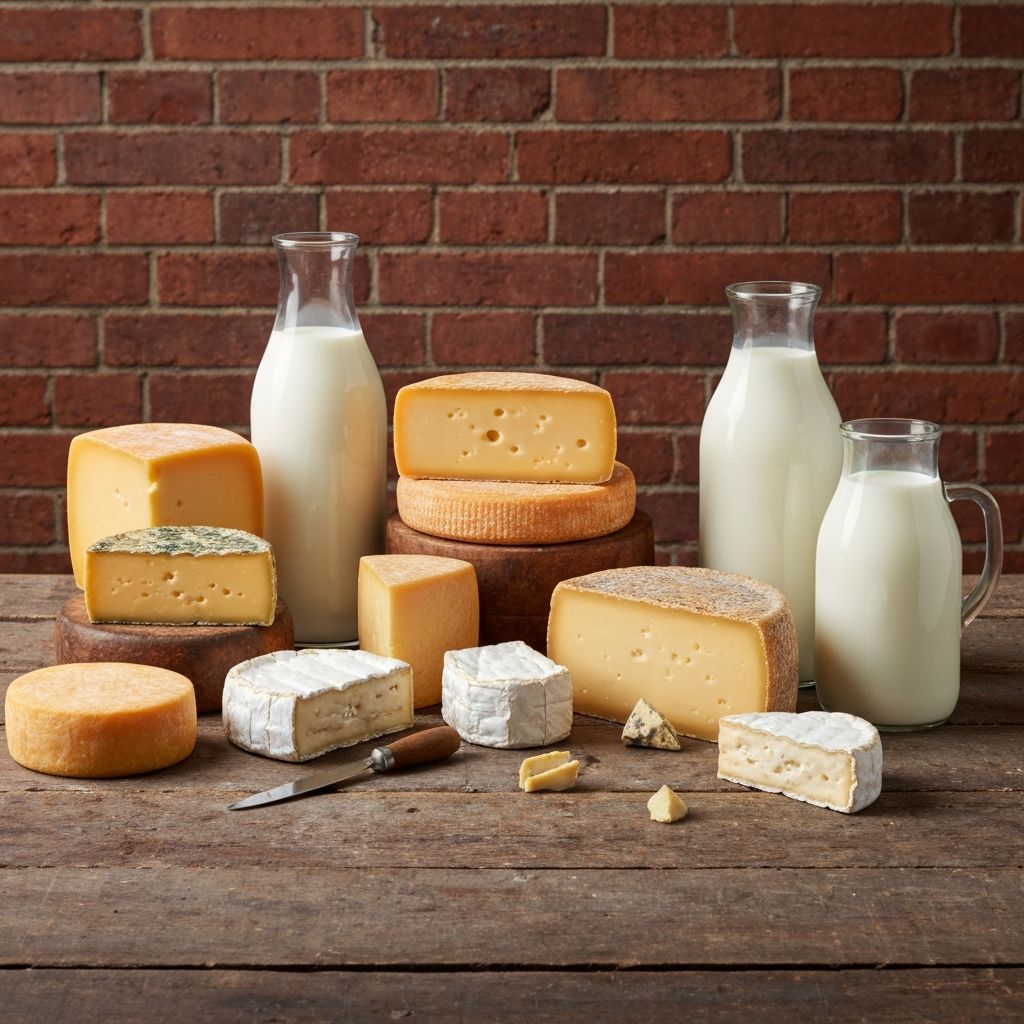
Northern England has long supported dairy cattle farming. The climate, pastureland, and agricultural heritage created conditions for dairy production. Greater Manchester and surrounding Lancashire regions have historically been important for dairy farming, providing milk to growing urban populations and supporting cheese-making traditions.
Milk Composition
Milk provides diverse macronutrients and micronutrients:
- Protein: Complete protein containing all essential amino acids
- Fat: Variable depending on type (whole, semi-skimmed, skimmed milk)
- Carbohydrates: Lactose (milk sugar), primary carbohydrate
- Calcium: Significant mineral content
- Phosphorus: Bone mineral, works with calcium
- Vitamin D: Often added to milk; supports calcium absorption
- B Vitamins: Particularly B12 and riboflavin
Cheese Production
Cheese represents milk in concentrated form, created through fermentation and processing:
- Hard Cheeses: Aged extensively, concentrated flavors and nutrients
- Soft Cheeses: Fresh, higher moisture content
- Blue Cheeses: Mold-ripened, distinctive flavors
- Traditional Regional Cheeses: Cheshire, Lancashire, and others from Northern tradition
Lactose Content and Tolerance
Milk contains lactose, which is broken down by the enzyme lactase. Some people have reduced lactase production:
- Lactose Intolerance: Varies in prevalence by ancestry and age
- Cheese and Yogurt: Lower lactose content than milk due to fermentation
- Individual Variation: Tolerance levels differ significantly between people
- Lactose-Free Options: Commercially available alternatives
Traditional Dairy Dishes
Northern English cuisine features dairy prominently:
- Custard: Milk-based sauce, traditional pudding base
- Bread and Butter Pudding: Milk and custard dessert
- Cheese Dishes: Cheese on toast, cheese incorporated in various preparations
- Mashed Potato with Butter and Milk: Common side dish
- Milk-based Sauces: Used in various dishes
- Tea with Milk: Cultural staple beverage
Nutritional Contributions
Dairy contributes to nutritional intake through multiple mechanisms:
- Accessible, affordable protein source
- Primary food source of dietary calcium in many populations
- Vitamin D source, particularly important in northern climates with limited sun exposure
- B vitamins necessary for energy metabolism
Modern Dairy Consumption
Contemporary Northern diets include diverse dairy products: fresh milk, yogurt, cheese, butter, cream. Consumption patterns have shifted with urbanization and changing food availability. Plant-based milk alternatives have become increasingly available.
Individual Dairy Responses
Individual responses to dairy vary significantly:
- Lactose intolerance prevalence differs
- Milk protein allergy is distinct from lactose intolerance (though rare in adults)
- Individual preferences influence consumption
- Health conditions may affect dairy suitability